

A Modern, Easier Alternative for At-breast Supplementation
Breastfeeding challenges sometimes require supplementing. For a parent whose goal is to exclusively breastfeed, it is ideal to keep the baby at the breast as much as possible, despite supplementation. This is the role that a supplemental nursing system (SNS) can play. It allows the baby to receive nutrition at the breast via pumped milk, donor milk, or formula.
Typically, the only way to keep the baby at the breast for supplementation is a traditional SNS. Unfortunately, parents and clinicians find SNS devices difficult to set up, stressful to use, and hard to maintain. When new parents are already struggling, clinicians may shy away from recommending an SNS to avoid overwhelming them or complicating the feeding experience. The Neotech Bridge® was created to offer the same benefits of at-breast supplementation. Yet, its all-in-one design removes the complexity, tubing, and frustration that often lead families to stop using an SNS prematurely.
What Is a Traditional SNS?
A traditional SNS consists of a container of milk (usually a bottle or bag) connected to a long, thin tube. The tube is taped to the breast or threaded through a nipple shield so the baby can receive supplemental milk while nursing. SNS systems are used for low supply, relactation, adoptive or induced lactation, and babies who struggle with latch or transfer.
In theory, the SNS is designed to keep the baby at the breast while providing extra nutrition. In practice, families often encounter several challenges:
- Difficult setup: The tube must be taped or carefully positioned, and it frequently shifts or falls out during the feed.
- Gravity-dependent flow: Milk flows quickly through the tube, even if the latch is shallow or inefficient.
- Risk of flow preference: Babies may learn to rely on the fast, easy flow from the tube instead of working to pull from the breast.
- Oral-motor “shortcuts”: Some babies learn to suck on the tube like a straw, bypassing effective breastfeeding mechanics.
- High stress and maintenance: Tubes can be messy, difficult to position, and frustrating to manage without help.
Because of these barriers, many families discontinue SNS use even when at-breast supplementation would otherwise be beneficial. Additionally, lactation professionals may be hesitant to recommend them due to concerns of overwhelm. Pediatricians and nurses placed in the role of supporting parents through a feeding challenge may not have the time in visits to work through setup and proper usage.
How the Neotech Bridge Works Differently
The Neotech Bridge offers a simpler, more intuitive way to supplement at the breast. Instead of a bottle and dangling tube, the Bridge uses a soft silicone nipple cover with a built-in channel connected to a syringe. This allows parents to provide supplementation only when the baby is latched and actively working at the breast.
Key differences include:
- Controlled flow instead of gravity: Parents gently press the syringe to deliver milk, preventing overwhelming flow and reducing the risk of flow preference.
- Reinforces effective latch and sucking: Babies must maintain suction and use coordinated suck-swallow patterns rather than “drinking from a tube.”
- No taping or threading required: The integrated design eliminates fiddling with tubes during feeds.
- Independence for parents: Most families can use the Bridge on their own, even overnight.
- Supports stimulation and milk production: Because babies stay on the breast and must work at the breast, parents get more consistent stimulation.
The Bridge was designed to give families the benefits of an SNS without the barriers that make traditional systems so hard to sustain.
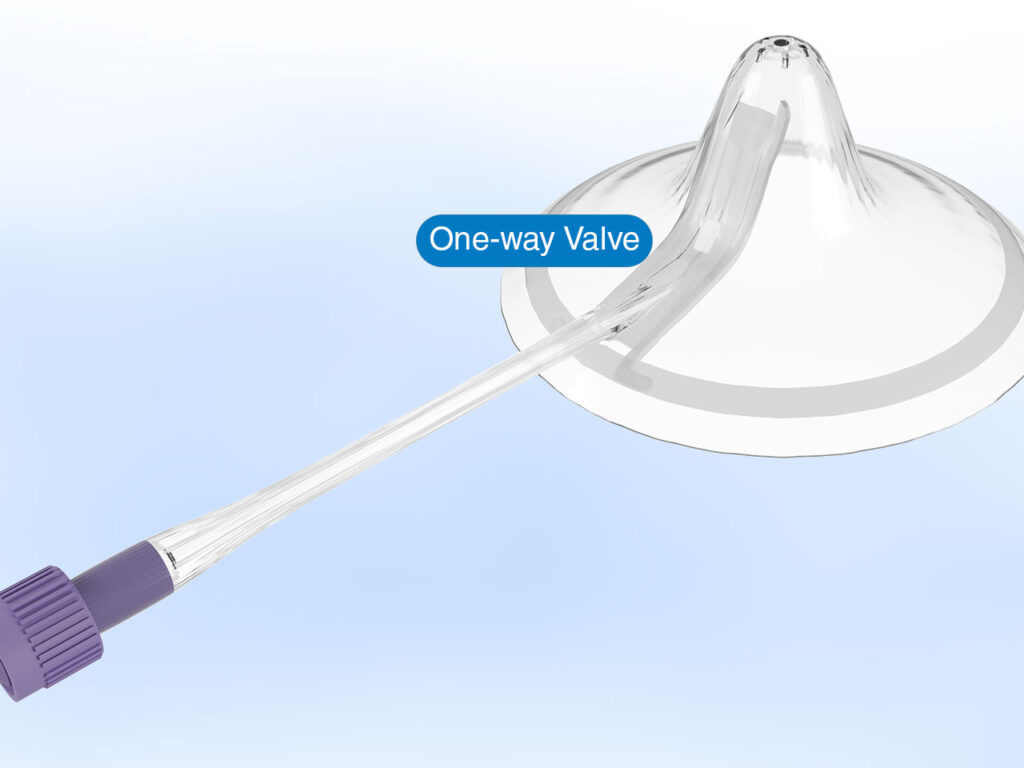
The One-way Valve: A Key Differentiator
The patented one-way valve of the Bridge allows supplementation to flow into the chamber but prevents flow backward toward the syringe.
As a result:
- The breast continues to receive stimulation, helping maintain or build milk supply
- Providers and parents retain precise control over timing, volume, and rate of supplementation
- Supplementation remains predictable and consistent, without risk of passive flow
- Babies can be gently reintroduced or re-acclimated to the breast in a controlled, physiologic manner
The one-way valve ensures the first priority of the Bridge is to stimulate mom’s breast tissue, while allowing precise supplementation control. This differs fundamentally from a gravity-driven SNS.
Click here to read more about the one-way valve.
When Might the Bridge Be Used Instead of a Traditional SNS?
The Bridge can be considered in many of the same situations where an SNS is traditionally used, such as:
- Low milk supply or supplementing while building supply
- Relactation or induced lactation
- Adoptive breastfeeding
- Early-term or late-preterm babies needing help sustaining suction
- Babies with latching or oral-motor challenges
- Bottle preference or breast refusal
- Circumstances where parents prefer to keep supplementation at the breast rather than using a bottle
Because the Bridge is easier to set up and maintain, families can use it more consistently—helping keep the baby at the breast while ensuring they get the nutrition they need.
Why Many Families Prefer the Bridge
Traditional SNS systems remain valuable tools, but they can be intimidating and difficult. The Bridge offers an all-in-one design that is easier for parents to manage, supports more effective latch mechanics, and gives families precise control over supplementation. It allows babies to stay engaged at the breast without relying on gravity-driven flow or complicated tubing—making at-breast supplementation more manageable for both parents and clinicians.