

What Makes the Neotech Bridge Different
When supplementation is needed during breastfeeding, most discussions focus on volume, timing, or frequency.
But one of the most important and often overlooked factors is flow mechanics.
One of the core features of the Neotech Bridge is a design that fundamentally changes supplementation mechanics: A one-way valve that prevents the infant from depending on flow and allows precise caregiver control over flow rate and volume.
Understanding Flow in Breastfeeding Physiology
Breastfeeding is not a continuous-flow system.
- Milk transfer at the breast depends on:
- Nipple stimulation
- Negative intraoral pressure
- Coordinated tongue and jaw movement
- Intermittent milk ejection reflexes
Milk does not flow simply because suction is present. Instead, feeding occurs in rhythmic bursts, coordinated with swallow and breathing patterns.
When supplementation introduces continuous or easily triggered milk flow, feeding mechanics can shift away from this pattern.
What the One-Way Valve Actually Does
The one-way valve in the Neotech Bridge is designed to prevent milk from flowing freely due to gravity or due to infant suction with improper mechanics.
Instead:
- Milk does not move through the system unless the caregiver actively titrates it via syringe
- Infant suction cannot independently pull milk down from the syringe
- There is no gravity-driven or continuous passive flow
Why Separating Suction from Flow Matters
In many feeding systems, suction directly results in milk movement. This can allow infants to obtain milk with less coordinated effort.
By contrast, the Bridge’s one-way valve requires the infant to:
- Maintain latch
- Engage in normal rhythmic sucking
- Continue practicing breast-based oral mechanics
Milk delivery remains caregiver-controlled, which means supplementation can be adjusted gradually and intentionally rather than driven by suction strength.
This supports a feeding environment that remains effort-based rather than flow-based.
Flow Dependency and Early Feeding Patterns
Early feeding experiences shape feeding behavior.
When milk flows easily and continuously, some infants may adapt their sucking pattern to that system.
The one-way valve reduces the likelihood of continuous flow exposure during supplementation by:
- Preventing infant-driven milk draw
- Eliminating passive flow when suction increases
- Maintaining caregiver control over supplementation pace
Importantly, this does not mean other methods are inappropriate. It means the Bridge was specifically engineered to preserve breastfeeding mechanics while supplementation is occurring.
The Role of Caregiver Titration
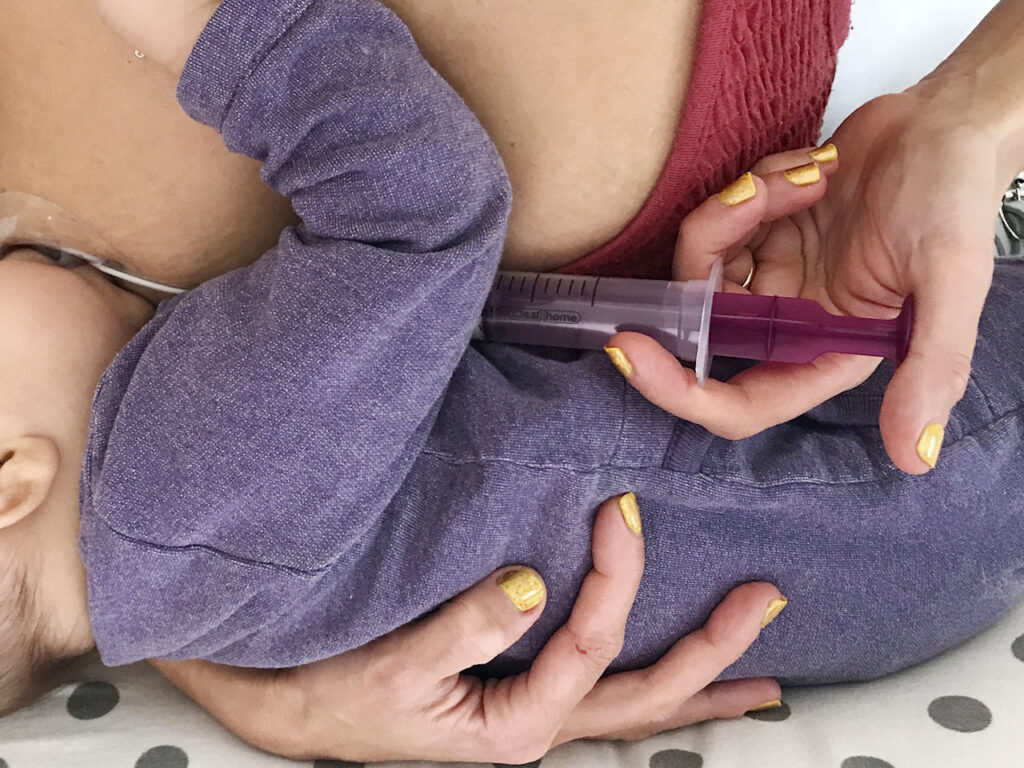
A defining feature of the one-way valve system is caregiver-controlled delivery.
This allows:
- Gradual introduction of supplementation
- Responsive pacing aligned with infant swallowing
- Adjustment based on clinical guidance
Rather than milk being pulled through the system by suction pressure, supplementation occurs only when the caregiver initiates it.
This mechanical distinction is central to how the Bridge differs from other supplementation devices.
Supplementation During Breastfeeding
Because the valve prevents independent milk draw, the infant must remain latched and engaged at the breast while supplementation occurs.
This maintains:
- Nipple stimulation
- Skin-to-skin proximity
- Ongoing opportunity for milk removal if present
The supplementation does not replace breastfeeding but is instead it is layered onto it.
Distinct from Other Tools: Bottles, Nipple Shields, SNS
While bottles, nipple shields, and traditional supplemental systems each serve clinical purposes, the key differentiator of the Bridge is the internal flow regulation.
| Feature | Bottle | Nipple Shield | Traditional SNS | Neotech Bridge |
| Primary Purpose | Deliver milk | Modify latch mechanics | Supplement at the breast | Supplement at the breast |
| Where Feeding Occurs | Off the breast | At the breast | At the breast | At the breast |
| Milk Flow Trigger | Infant suction + gravity | Infant suction dependent | Often infant suction dependent | Caregiver-controlled only (one-way valve) |
| Continuous/Passive Flow | Possible | Yes, with letdown | Possible depending on suction | No passive or suction-triggered flow |
| Maintains Nipple Stimulation | No | Yes | Yes | Yes |
| Flow Control Precision | Limited to nipple type | N/A | Variable | Caregiver titration via syringe |
| Designed to Prevent Flow Preference | No | No | Not specifically | Engineered to reduce continuous flow exposure |
| Breast Stimulation During Supplementation | No | No | Yes | Yes |
By preventing infant-driven or passive milk transfer, the Neotech Bridge maintains an effort-based feeding pattern while supplementation is delivered in a controlled, intentional way.
Click here to read Bridge vs. Bottle.
Click here to read Nipple Shield Alternative.
Click here to read Bridge vs. SNS.